


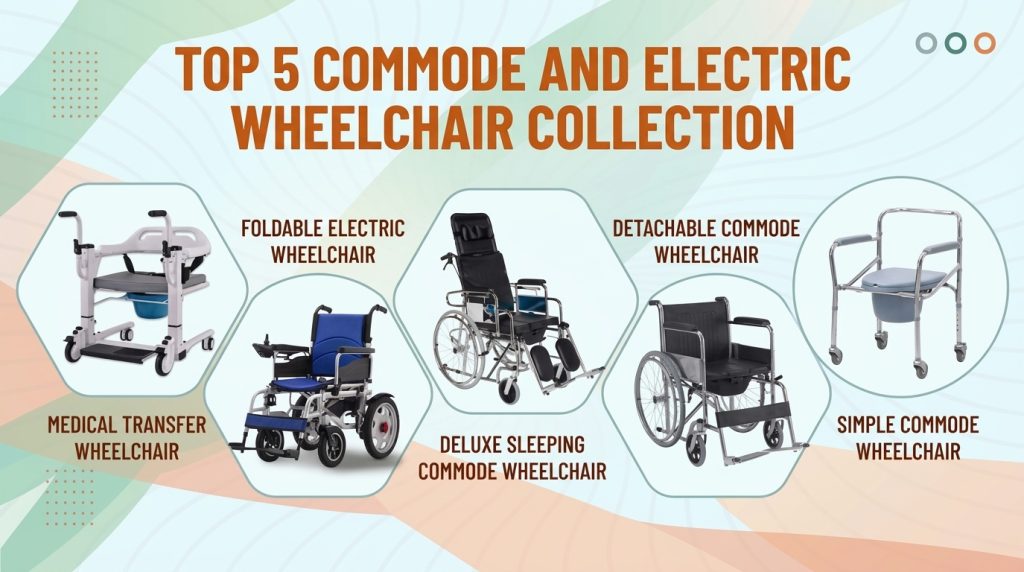
Choosing the right wheelchair is hard when you live far from a sick parent, or when work leaves you little time to research. This guide on the types of wheelchairs breaks down five practical options in plain language, so you can decide quickly and with confidence. You do not need to be a medical expert. You just need to know what each chair does best, and who it suits. Whether your mother struggles with bathroom trips, your father needs help moving between rooms, or you are an expatriate son trying to arrange care for a parent back home, this guide was written for you. Let’s walk through each option, one by one, with real details you can actually use today.
Types of Wheelchairs: Why Picking the Right One Matters
A wheelchair is not just a chair with wheels. For a person who cannot walk easily, it becomes part of daily life. It affects how they use the bathroom, how they eat meals, and how often they can sit with family in the living room. Pick the wrong one, and small daily tasks turn into daily struggles. Pick the right one, and life gets easier for everyone in the house. The World Health Organization estimates that around 80 million people worldwide need a wheelchair. That number keeps growing every year as populations age. WHO also stresses that fitting, training, and follow-up matter just as much as the chair itself. In other words, the best chair is the one that fits the person, not the one with the most features. Families often ask the same question first: “Which wheelchair is best?” But there is no single answer. A chair that works well for a grandmother who needs help in the bathroom will not suit a father who wants to move around the house on his own. Learning the real differences between models before you buy saves both money and heartache later.
A Wheelchair Is a Bridge, Not Just a Seat
Think of mobility as a road. For someone who walks easily, that road is smooth. For someone with limited movement, stairs, long hallways, and bathroom transfers turn into real obstacles. A good
wheelchair acts like a bridge over those obstacles. It does not just move a person from one room to another. It gives them back a piece of their independence. Picture an elderly parent who struggles to reach the toilet safely at night. A commode wheelchair can solve that problem directly. Now picture a patient with weak arms who cannot push a manual chair. An electric wheelchair solves a completely different problem. This is why the decision should always start with the person’s daily struggle, not with the product catalog.
How to Choose the Right Type of Wheelchair for Your Family
Start by asking a few honest questions. Is walking the biggest problem? Is it getting to the bathroom? Does your loved one need a caregiver’s help for every transfer? Or do they just want to
move around the house without asking for help each time? Your answers will point you toward the right category almost immediately, out of the many types of wheelchairs available today. Next, think about the home itself. A large, heavy chair might feel comfortable, but it may not fit through a narrow bathroom door. A family that travels often between the village and the city may
need a foldable design instead. Door width, floor type, ramps, and storage space all shape which chair will actually work in real life, not just in a showroom.
Features Worth Checking Before You Buy
Look past the product photo. Check the seat width, seat height, backrest, footrests, armrests, and brakes. For commode models, check the pan design and how easy it is to remove and clean. For
electric models, check battery life, charging time, and how simple the controls are to operate. For transfer models, check stability and how easily a single caregiver can push and steer it. Comfort matters just as much as function. A person may sit in this chair for hours every day. An uncomfortable seat turns a helpful tool into a daily complaint. Always think about the user’s body size and posture, not just the price tag on the box.
1. Deluxe Sleeping Commode Wheelchair

A Deluxe Sleeping Commode Wheelchair combines three things in one frame: mobility, a reclining rest position, and toilet access. It suits patients who spend long hours sitting or resting and who
cannot manage repeated transfers between a bed, a wheelchair, and a bathroom. The reclining back gives extra comfort compared with a standard wheelchair, while the built-in commode simplifies personal care throughout the day.
The biggest win here is convenience. Instead of buying separate equipment for sitting, resting, and toileting, one chair now does all three jobs. This matters most for families with an elderly parent who needs near-constant support, or for a working son or daughter who cannot be home every hour to help with transfers.
Key Features and Benefits
Most models include an adjustable reclining backrest, removable footrests, padded armrests, locking brakes, and a removable toilet pan. Some also add extra cushioning for pressure relief during long sitting periods. These details matter for anyone who needs to sit for most of the day.
The real benefit shows up in reduced transfers. Every time a caregiver moves a patient from bed to chair to toilet, there is a risk of falls or strain injuries. A sleeping commode wheelchair cuts that number of transfers down significantly, which protects both the patient and the person caring for them.
2. Detachable Commode Wheelchair

Detachable Commode Wheelchair — mobility and toilet access in one chair.
A Detachable Commode Wheelchair gives mobility and bathroom support, with one key difference: the commode section can be removed for cleaning. This makes daily hygiene simpler for whoever is providing the care. It suits elderly users, patients with limited mobility, and anyone who cannot safely walk to a bathroom without help.
Families often choose this model to cut down on repeated movement. Walking a patient to a conventional toilet several times a day can be physically demanding for both sides. A detachable commode wheelchair allows toileting to happen with far less movement, while the removable pan keeps the whole process more hygienic.
Who Benefits Most From This Design?
This chair works well for elderly parents, stroke patients, and anyone recovering from surgery who still needs help reaching the bathroom. It also helps in homes where the bathroom sits far from the bedroom, or behind a narrow hallway that is hard to navigate quickly.
For a caregiver, the time saved adds up fast. Daily care already involves many small tasks: moving the patient, preparing the bathroom, cleaning up afterward, and helping with clothing. A detachable commode wheelchair removes several of those steps from the routine, every single day.
3. Foldable Electric Wheelchair

A Foldable Electric Wheelchair pairs powered movement with a folding frame. Instead of manually pushing large rear wheels, a motor and battery do the work. This helps people with weak arms, low stamina, or conditions that make manual propulsion tiring or unsafe. The folding design also makes storage and transport far simpler than a bulky, rigid power chair.
Powered mobility changes daily life in a real way. Rather than waiting for someone to push the chair, the user can move independently, based on what their body and mind can safely manage. In
2026, more models also include smoother joystick controls and lighter battery packs, making them easier for elderly users to operate on their own.
Benefits of a Foldable Electric Wheelchair
Portability is the standout advantage. Families in apartments or smaller homes often need a chair that folds down when it is not in use. It also matters for transport, since many families move a
parent between a village home and a city hospital. Always check the folded size and total weight, because not every “foldable” model is equally easy to lift into a car. Battery performance matters too. Before buying, check the charging time, the expected travel range on one charge, and how easy the joystick is to use. A powered wheelchair is not simply a manual chair with a motor bolted on. It needs to match the user’s strength, eyesight, and comfort with technology.
4. Medical Transfer Wheelchair
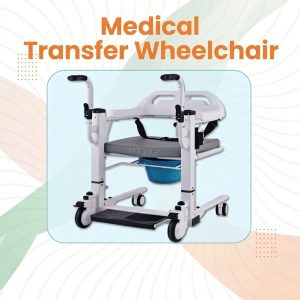
A Medical Transfer Wheelchair is built for one main job: moving a patient safely from one place to another. It works well in hospitals, clinics, and home-care settings where a patient needs to move
between a bed, a treatment room, or another chair several times a day. Compared with a chair meant for independent use, a transfer chair focuses on caregiver control, stability, and a compact
frame.
Picture a patient who cannot walk but needs to move from the bedroom to the living room, or from a hospital bed to an X-ray room. Carrying someone by hand is risky for both people involved. A well designed transfer wheelchair replaces that risk with a controlled, wheeled movement instead.
Why Medical Transfer Wheelchairs Are So Useful
The core benefit is assisted mobility for patients who cannot move on their own. The compact frame also helps in tight spaces, such as narrow hospital corridors or small home bathrooms.
Common features include locking brakes, supportive seating, footrests, and a lightweight frame that one caregiver can manage alone.
Safe transfer technique still matters, even with the right chair. A caregiver should always check whether the patient can bear any of their own weight before attempting a transfer. The chair
reduces risk, but it does not remove the need for careful, steady handling.
5. Commode Wheelchair
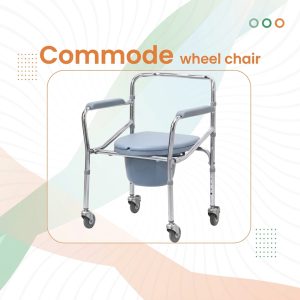
A Commode Wheelchair blends everyday mobility with toilet access in a single, simpler frame. It typically has an opening in the seat and a removable pan underneath, so the chair can double as a
bedside commode when needed. This suits patients who cannot walk to a bathroom, or who would find repeated transfers physically exhausting.
For elderly patients, bathroom access is often the hardest part of the day. A standard wheelchair solves movement but not toileting. A commode wheelchair solves both problems in one product,
which can meaningfully cut down the number of transfers a caregiver has to manage every day.
Advantages of a Commode Wheelchair
The clearest advantage is doing two jobs with one chair. It supports mobility and toilet access without needing two separate pieces of equipment in a small home. That matters in apartments
and smaller houses, where space is often limited.
Hygiene still needs attention. Look for a removable pan, surfaces that wipe clean easily, and sturdy brakes. A commode wheelchair is genuinely useful, but it should always be chosen based on the
user’s size, weight, and level of independence, not just the lowest price you can find.
Types of Wheelchairs Compared: Which One Fits Your Family?
There is no single “best” wheelchair for every family. The right pick depends on what your loved one struggles with most, every single day. If bathroom access is the hardest part, a commode or
detachable commode wheelchair usually helps the most. If independent movement matters most, a foldable electric wheelchair is worth the investment. If the main need is safely moving a patient
with a caregiver’s help, a medical transfer wheelchair fits best.
Below is a quick side-by-side view of the five options covered in this guide, to help you compare them at a glance.
| Wheelchair Type | Best For | Main Advantage |
| Deluxe Sleeping Commode | Long-term bed rest patients | Combines resting, sitting, and toileting |
| Detachable Commode | Elderly needing bathroom help | Removable pan for easy cleaning |
| Foldable Electric | Users with weak arms or low stamina | Independent, powered movement |
| Medical Transfer | Caregiver-assisted patients | Safe, controlled movement between rooms |
| Commode Wheelchair | Compact home bathroom needs | Dual mobility and toilet function |
Safety and Maintenance Tips for Every Wheelchair Type
Safety comes first, no matter which model you choose. Before every use, check that the brakes lock properly and that the frame feels stable. Inspect the wheels, footrests, armrests, and cushions on a regular schedule, not just when something feels wrong. For electric wheelchairs, check the battery and charging cable often, and follow the manufacturer’s charging instructions closely.
Caregivers should also learn safe transfer habits. Never assume a patient can move from a bed to a wheelchair just because the brakes are locked. Always check the person’s strength, balance, and ability to bear weight first. A few extra seconds of caution can prevent a fall that changes everything.
How to Buy the Right Wheelchair in Bangladesh, Even From Abroad
When buying a wheelchair in Bangladesh, look past the sticker price. Compare build quality, weight capacity, warranty terms, after-sales support, and how easily replacement parts can be found. A cheap chair that breaks down in six months is rarely the better deal, especially for a patient who depends on it daily.
If you live overseas and are arranging care for a parent back home, ask the seller detailed questions over phone or video call before you commit. Request real photos and videos of the exact model, confirm delivery timelines to your parent’s district, and ask whether the seller offers setup help or a demonstration at the doorstep. A trustworthy medical equipment provider should be able to answer all of this clearly, without pressuring you to decide on the spot.
For working sons and daughters juggling a job and a sick parent’s care, it also helps to buy from a provider that offers phone support in Bengali and English both, so any family member at home can call for help with maintenance later.
Conclusion
Choosing between the types of wheelchairs really comes down to one thing: what does your loved one struggle with most, every single day? The five options covered here, the Deluxe Sleeping Commode Wheelchair, the Detachable Commode Wheelchair, the Foldable Electric Wheelchair, the Medical Transfer Wheelchair, and the Commode Wheelchair, each solve a different daily problem.
Do not choose based on price or appearance alone. Think about mobility level, body size, home layout, and how much caregiver support is available day to day. The right wheelchair should feel less like a medical device and more like a reliable helper, one that gives your family member back a little more independence, dignity, and comfort every day.
Types of Wheelchairs: Frequently Asked Questions
Which wheelchair is best for elderly people?
It depends on their biggest daily struggle. A commode wheelchair helps most when bathroom access is difficult. A medical transfer wheelchair helps when a caregiver needs to move them often. If they can safely operate powered controls, a foldable electric wheelchair offers more independence.
What is a commode wheelchair used for?
It provides both mobility and toilet access in one chair. It usually has a seat opening and a removable pan underneath, which helps people who cannot walk to a bathroom or who need caregiver assistance during toileting.
Is a foldable electric wheelchair easy to transport?
Yes, generally easier than a rigid power wheelchair, though this varies by model. Always check the folded size, total weight, and battery type before buying, especially if it needs to fit in a family car.
What is a medical transfer wheelchair used for?
It is built to help caregivers move patients safely between rooms, beds, or treatment areas. These chairs focus on stability, easy handling, and caregiver control rather than independent self-propulsion.
How do I choose the right type of wheelchair?
Start with the user’s biggest daily challenge, then check seat size, weight capacity, comfort, brakes, and portability. For complex needs, ask a medical equipment provider for guidance before buying.
