


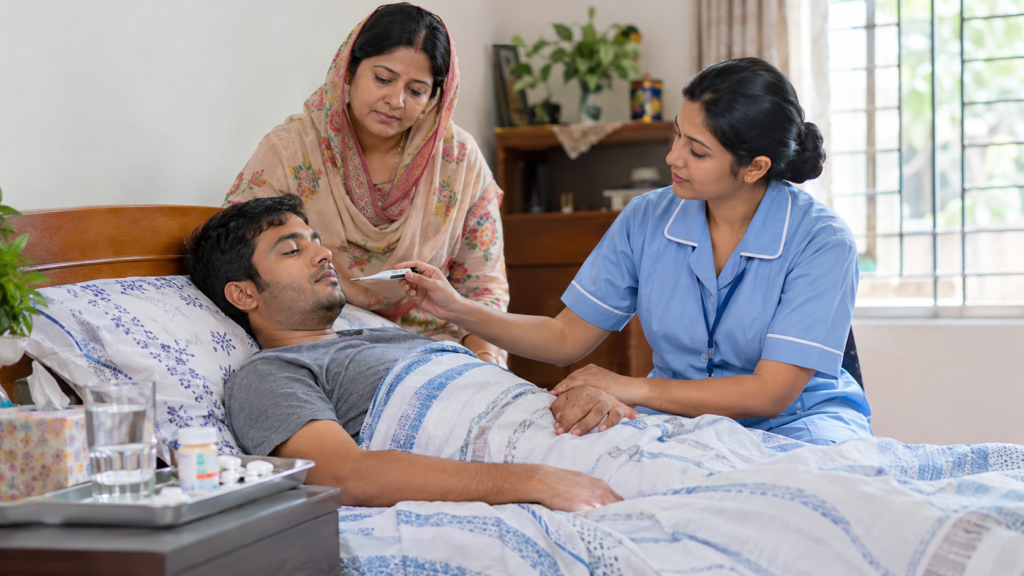
Dengue fever puts enormous pressure on families, especially in densely populated cities like Dhaka, where cases rise sharply every monsoon and post-monsoon season. Crowded hospitals, long waits, and the risk of exposure to other infections lead many families to look for a safer, more comfortable option. Maisha Care provides dengue patient care service at home, bringing trained caregivers, clinical monitoring, and practical medical support directly to the patient’s bedside.
What Is Dengue Fever and Why Does Home Care Matter?
Dengue is a mosquito-borne viral illness spread by the Aedes aegypti and Aedes albopictus mosquitoes, as outlined in the World Health Organization’s dengue and severe dengue fact sheet. Most infections are mild to moderate, but a significant number progress to severe dengue, which can involve plasma leakage, bleeding, and organ impairment.
Because there is no specific antiviral treatment for dengue, recovery depends on supportive care: adequate hydration, rest, fever control, and close monitoring of warning signs. This is where structured home care makes a real difference. A patient who is watched carefully, hydrated consistently, and assessed regularly has a far better chance of passing through the dangerous days safely.
Our Dengue Patient Care Service at Home
We deliver professional dengue nursing and caregiving at home designed around the stages of the illness. Our service is built on three principles: early detection of deterioration, consistent supportive care, and clear communication with the patient’s treating physician and family.
Our home-based dengue care includes:
- Regular monitoring of vital signs, including temperature, pulse, blood pressure, respiratory rate, and oxygen saturation
- Fluid intake tracking and encouragement of oral rehydration
- Urine output monitoring, a key indicator of hydration status
- Fever management following the treating doctor’s instructions
- Recording of blood test results, including platelet count and hematocrit, to share with the physician
- Observation for bleeding signs, such as gum bleeding, nosebleeds, black stools, or skin spots
- Nutritional support with light, easily digestible meals
- Coordination for sample collection and diagnostic tests at home where available
- Emergency escalation to hospital care when warning signs appear
Understanding the Three Phases of Dengue
Effective care depends on knowing which phase the patient is in. We structure our monitoring around the three recognized phases, which align with the clinical course described by the CDC’s dengue resources.
Febrile Phase (Days 1 to 3)
The illness begins suddenly with high fever, severe headache, pain behind the eyes, muscle and joint pain, nausea, and rash. During this phase our caregivers focus on comfort, hydration, and temperature control. Tepid sponging, rest, and regular fluids are the foundation of care.
Critical Phase (Days 3 to 7)
As the fever falls, the patient may appear to be improving, but this is the most dangerous period. Plasma leakage can occur, platelets may drop sharply, and shock can develop. Our team increases the frequency of monitoring and watches closely for warning signs. Fluid balance matters most here: too little can lead to shock, and too much can cause fluid overload.
Recovery Phase (Days 7 to 10)
Fluids reabsorb, appetite returns, and blood counts begin to normalize. Our caregivers support gradual mobilization, nutrition, and rest, while watching for fluid overload or lingering fatigue.
Dengue Warning Signs We Monitor Around the Clock
Early recognition of danger signals saves lives. Our caregivers are trained to identify and escalate the following dengue warning signs immediately:
- Severe or continuous abdominal pain
- Persistent vomiting
- Bleeding from the gums, nose, or in vomit or stool
- Extreme drowsiness, restlessness, or irritability
- Cold, clammy skin and rapid, weak pulse
- Reduced urination
- Rapid breathing or difficulty breathing
- A sudden drop in platelet count with a rising hematocrit
When any of these appear, we alert the family and treating physician and arrange urgent hospital transfer without delay.
Hydration and Nutrition During Dengue Recovery
Hydration is the single most important element of dengue home care. Our caregivers encourage frequent intake of:
- Oral rehydration solution (ORS)
- Clean drinking water
- Coconut water
- Fresh fruit juices
- Light soups and broths
For meals, we recommend soft, nutritious, easy-to-digest foods such as rice porridge, boiled vegetables, eggs, lentil soup, and fruit. Our caregivers take care to avoid dark-colored foods and drinks that can mask signs of gastrointestinal bleeding, such as red or black stools and vomit.
Medication Safety in Dengue
Self-medication is a serious risk in dengue. Paracetamol (acetaminophen) is the usual fever medication, given strictly at the dose set by the doctor. Aspirin, ibuprofen, diclofenac, and other NSAIDs should be avoided, as they increase the risk of bleeding. Our caregivers never change prescribed medication and follow the treating physician’s orders precisely. They also remind families that antibiotics do not treat dengue and should only be used if a doctor prescribes them for a separate reason.
Benefits of Dengue Care at Home with Maisha Care
Choosing home care for dengue patients offers advantages that matter to families:
- Comfort and emotional security in familiar surroundings
- Lower exposure to hospital-acquired infections
- One-to-one attention instead of shared nursing staff
- Reduced stress on family members, who no longer need to manage monitoring alone
- Easier support for children and elderly patients, who often do better at home
- Cost-conscious care compared with prolonged inpatient stays, when the patient’s condition allows home management
Who Should Choose Home Dengue Care?
Home care suits patients whom the treating doctor has assessed as stable and able to take fluids by mouth. It is a strong option for mild to moderate dengue, for post-hospital recovery after discharge, and for families who want professional monitoring alongside outpatient treatment.
Patients with severe dengue, signs of shock, significant bleeding, or serious underlying conditions need hospital admission. We are clear about this threshold and will advise transfer without hesitation when it applies. Pregnant women, infants, older adults, and people with diabetes, heart disease, or kidney disease are higher-risk groups and need especially close physician oversight. For current national dengue updates and hospital guidance in Bangladesh, families can refer to the Directorate General of Health Services (DGHS) and the Institute of Epidemiology, Disease Control and Research (IEDCR).
How Our Dengue Home Care Process Works
- Contact us and share the patient’s age, symptoms, day of illness, and current test reports.
- Initial assessment by our care team to understand the patient’s condition and the doctor’s advice.
- Care plan setup covering monitoring schedule, hydration targets, diet, and escalation steps.
- Daily care delivery with documented observations shared with the family and physician.
- Recovery support until the patient is stable, eating well, and blood counts are improving.
Dengue Prevention Guidance for Families
Our service extends beyond treatment. We guide households on preventing mosquito breeding and further infections, following the CDC’s dengue prevention guidance:
- Remove standing water from flower pots, buckets, tires, coolers, and rooftop containers every few days
- Cover water storage containers tightly
- Use mosquito nets, screens, and repellents, especially at dawn and dusk when Aedes mosquitoes are most active
- Wear long sleeves and trousers during peak mosquito hours
- Keep drains and gutters clear
- Protect the patient from mosquito bites, since an infected patient can pass the virus to mosquitoes that then infect others in the household
Why Families Trust Maisha Care for Dengue Patient Care
We combine compassionate caregiving, clinical awareness, and responsive communication. Our caregivers are trained to observe carefully, document accurately, and act quickly. We work alongside your doctor rather than replacing medical advice, and we keep families informed at every stage so no one is left guessing during a stressful illness.
Frequently Asked Questions About Dengue Home Care
Can dengue be treated at home?
Many mild to moderate cases can be managed at home with a doctor’s guidance, plenty of fluids, rest, and regular monitoring. Patients showing warning signs need hospital care.
How long does dengue last?
Most patients recover within 7 to 10 days, though fatigue may continue for several weeks.
When should a dengue patient go to the hospital?
Go immediately if there is severe abdominal pain, persistent vomiting, bleeding, drowsiness, breathing difficulty, cold extremities, or very little urine.
Is a low platelet count always dangerous?
Not always. Platelet count is one indicator among several. Doctors also consider hematocrit, symptoms, and vital signs. Do not give platelet transfusions or medication without medical advice.
Can dengue patients eat normally?
Yes. Light, nutritious food and abundant fluids are encouraged. Avoid dark-colored items that can disguise bleeding.
Book Dengue Patient Care at Home with Maisha Care
When a family member has dengue, every hour of careful observation counts. Maisha Care provides dengue patient care service at home with trained caregivers, structured monitoring, and clear escalation to hospital care when needed. Contact us today to arrange professional, reliable, and compassionate dengue home care for your loved one.
