

Your mother needs a blood test. You are at work. Your father cannot walk to the car. Or maybe you live in Dubai, London, or New York, and your parents are alone in Dhaka. Sound familiar? In fact, many families face this stress every week. This home sample collection guide is for you. A trained collector visits the patient’s home, takes the sample, and sends it to a lab. No queues. No taxi rides. No tired patients in waiting rooms. Here, you will learn who needs this service, which tests you can book at home, and how to pick a safe provider. We wrote it for busy families who want better care without chaos. So let’s start with the basics.
Sample Collection at Home: How It Works Step by Step
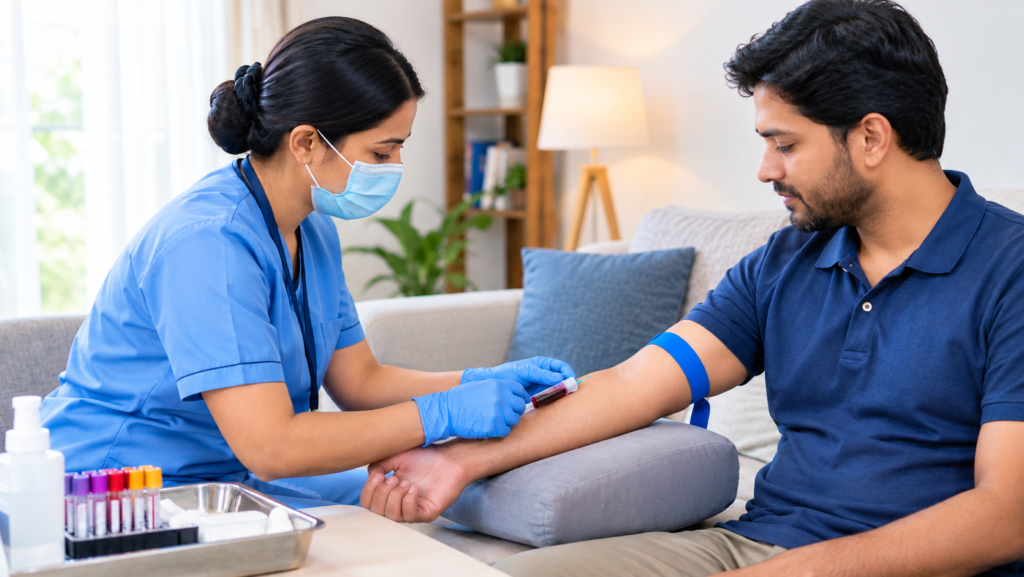
A trained health worker visits the patient at home. First, they collect the sample your doctor ordered. Most often, that means blood or urine, though some tests need stool or another specimen. Next, the collector labels the sample, seals it, and carries it to a partner lab. The lab then shares the report, often by email, app, or WhatsApp. In short, think of it as a lab visit that comes to you.
Who Needs Sample Collection at Home? 9 Real Cases
This home sample collection guide covers the nine groups that gain the most. Does someone in your family fit one of them?
1. Elderly People
Older adults tire quickly. For example, a lab trip can leave them weak for the rest of the day. Also, joint pain, poor balance, and dizziness make Dhaka traffic harder still. At home, they sit in a familiar chair and finish in minutes. As a result, you do not have to take leave from work. In addition, shorter, calmer visits lower the risk of a fall.
2. Bedridden Patients
Moving a bedridden patient takes real effort. For instance, you may need two or three helpers, a wheelchair, and a roomy vehicle. Besides, every move can bring pain and risk. Instead, a collector can take the sample right at the bedside. In turn, your loved one stays safe and comfortable. Also, routine blood tests are usually the easiest to arrange.
3. Patients Recovering After Surgery
Doctors often order follow-up tests after surgery. These check healing, infection, and blood levels. However, stitches hurt, and a bumpy car ride makes it worse. Instead, with a home visit, the patient rests while the lab does the work. The report then goes to the surgeon. Still, call the doctor at once if there is a high fever or heavy bleeding.
4. Patients With Chronic Diseases
Diabetes, kidney disease, heart problems, and thyroid disorders need regular tests. For example, common ones include blood sugar, HbA1c, creatinine, and lipid profile. In fact, one missed test can delay a change in treatment. Monthly lab trips also wear patients down, so a fixed home visit keeps the routine steady. The WHO diabetes fact sheet explains why regular checks matter. Above all, follow your doctor’s plan and share each report with them.
5. People With Disabilities or Mobility Problems
A broken leg, a stroke, or a lifelong disability can make travel a big task. On top of that, steps, crowded buses, and narrow lifts add more trouble. Also, not every lab has a ramp or a working lift. Therefore, a home visit removes that barrier. Thus, the patient gives the sample with less pain and stress. Likewise, family helpers save time and money.
6. Busy Professionals and Working Individuals
You do not have to be sick to need this. Instead, office hours, long commutes, and family duties eat up your day. As a result, check-ups often get pushed aside. A visit before work, however, fixes that. Then you give the sample and head to the office. Plus, early slots suit fasting tests, if your area offers them.
7. Children and Infants
Children often feel scared in busy labs. Likewise, sick infants should not sit in a waiting room full of germs. In contrast, a home visit keeps them calm and close to a parent. But drawing blood from a child takes special skill. So ask if the collector has experience with children. Also check that the right equipment is ready.
8. Patients Who Need Frequent Medical Tests
Some treatments need tests every week. Examples include cancer care, kidney care, and blood-thinner checks. Moreover, repeat trips cost money and drain energy. Because of this, home collection can cut travel costs over time. Furthermore, families can book visits to match the doctor’s schedule. Finally, a simple calendar helps so no test slips by.
9. Patients Who Have Difficulty Leaving Home
Some people feel too weak or breathless to go out. Others, meanwhile, live with severe pain or deep anxiety. For them, a home visit removes a big hurdle. But a routine visit is not for emergencies. For instance, chest pain, trouble breathing, or sudden confusion need urgent care. In those cases, go to a hospital right away.
Home Sample Collection Guide: Key Benefits for Your Family
Here is what your family gains.
Convenience: Book by phone and let the collector come to you. As a result, nobody has to travel.
Time savings: No traffic, no parking, no queue. In addition, you get hours back for work and family.
Comfort: Patients stay in their own bed or chair. That means less stress and less pain.
Support for caregivers: One person can handle the whole process. Therefore, working sons and daughters can fit it around their day.
Peace of mind from abroad: If you live overseas, you can arrange the visit for your parents. Ask the provider how reports will reach you, by email or phone.
Flexible scheduling: Many providers offer early morning and evening slots. However, availability depends on your area.
Still, quality matters. After all, a poorly handled sample can give a wrong result. The World Health Organization publishes guidelines on drawing blood that explain safe collection steps. So ask your provider whether its staff follow similar standards.
Which Tests Can You Book at Home?
It depends on the lab. Common choices include:
- Complete Blood Count (CBC)
- Blood sugar tests, fasting and random
- HbA1c
- Lipid profile
- Kidney function tests
- Liver function tests
- Thyroid tests
- Urine routine exam
- Stool routine exam, where supported
- Other tests your doctor prescribes
However, some tests need a hospital visit. Scans and X-rays are good examples. So confirm your test before you book. Also, ask about fasting, medicine, and report timing.
How to Prepare for the Visit
A little planning gives a better sample and a faster report.
- Check the rules: Ask the doctor or lab if you need to fast.
- Keep taking medicine: Do not stop any prescribed drug unless your doctor says so.
- Keep the prescription ready: Show it to the collector.
- Pick a clean, bright spot: A well-lit room makes the work easier.
- Share key details: Tell the collector about fear of needles, past fainting, or thin veins.
- Ask about the report: Learn when and how it will arrive.
For urine and stool tests, follow the lab’s instructions on containers and storage.
Home Sample Collection Guide: How to Pick a Safe Provider
However, not every provider offers the same quality. Check these points before you book.
- Trained staff: Ask who will visit and what training they have.
- Hygiene: Look for new needles, gloves, and clean tools at every visit.
- Sample handling: Ask how samples are labeled, stored, and carried to the lab.
- Lab quality: Find out which lab tests the sample and how it sends reports.
- Clear pricing: Ask about the visit fee and test charges. Avoid surprise costs.
- Service area and timing: Confirm the provider covers your address and preferred time.
In addition, prices and coverage vary across Bangladesh. You can also check licensing details with the Directorate General of Health Services (DGHS).
Maisha Care: Care That Comes to Your Door
Maisha Care supports families who look after sick, older, or dependent loved ones. Use this home sample collection guide to decide if home visits fit your family. Moreover, our team can help when travel is hard or time is short. In short, it suits elderly patients, bedridden patients, people after surgery, and anyone who cannot easily reach a lab. Living abroad? A family member overseas can start the conversation with us. Finally, contact Maisha Care to confirm the available tests, service areas, appointment times, and charges.
Frequently Asked Questions
Who should use sample collection at home?
Elderly people, bedridden patients, people with mobility problems, patients after surgery, and anyone who needs regular tests can gain from it. In addition, busy working adults can use it too.
Is it safe?
Yes, when trained staff follow proper hygiene, labeling, storage, and transport steps. Therefore, always ask the provider about these before you book.
Can I get a blood test at home?
Many common blood tests are possible. However, availability depends on the test, the lab, and the provider.
Do I need a doctor’s prescription?
Rules differ by test and provider. Some tests need a doctor’s advice, so confirm this when you book.
Can children have samples taken at home?
Some tests are available for children. However, the collector must have experience with young patients and the right equipment.
How can I book with Maisha Care, even from abroad?
Contact Maisha Care and share the patient’s name, address, and test list. In most cases, a family member overseas can start the request. Then we will confirm tests, timing, and price before the visit.
