


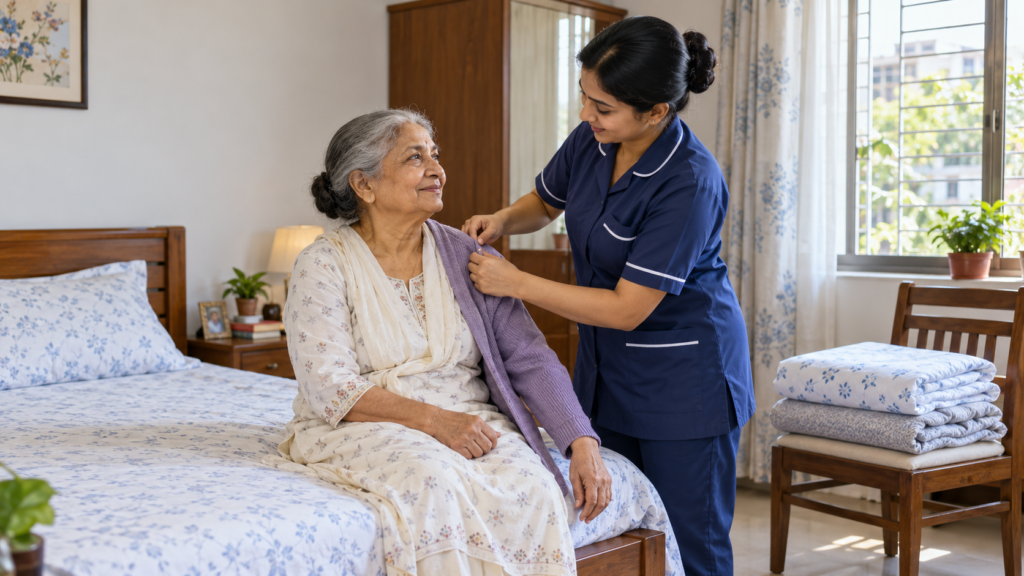
Caring for a loved one takes time, patience, and love. But daily work can make it hard to stay beside a sick parent or family member. Some patients need help with bathing, dressing, eating, and walking. Others need someone to talk to or stay with them during the day. A Female Caregiver Service can help families manage these needs at home. It allows patients to receive personal support in a familiar place. It also gives family members more time to manage work and other duties. Maisha Care helps families explore home care options based on their needs. Whether you live in Dhaka or abroad, the right care plan can help your loved one feel safer, more comfortable, and less alone.
What Is a Female Caregiver Service?
A female caregiver helps people who need support with daily activities. These people may include older adults, patients recovering from illness, and people living with disabilities. A caregiver can assist with personal hygiene, meals, walking, and daily routines. The level of support depends on the patient’s condition and care plan.
Many families choose a female caregiver for personal comfort and privacy. Some patients feel more comfortable receiving personal care from a woman. This may be important during bathing, dressing, or other private activities.
According to MedlinePlus’s guide to home care services, home care can help people with special needs remain in their own homes. However, a caregiver does not automatically qualify to provide medical treatment. Clinical tasks may require a qualified nurse or another authorized healthcare professional.
10 Benefits of Hiring a Female Caregiver in Dhaka
1. Personal Care With More Privacy
Some patients need help with bathing, dressing, grooming, and using the toilet. These tasks can feel uncomfortable without trusted support. A female caregiver may help patients who prefer a female care provider. She can assist with daily hygiene while respecting the patient’s dignity.
Families should discuss personal care needs before the service begins. They should also explain the patient’s preferences and boundaries. This helps everyone understand the expected level of support.
2. Support for Elderly Parents
Older adults may struggle with walking, preparing meals, or completing household routines. Some also need help remembering daily activities. A caregiver can assist with these tasks and help maintain a regular routine.
For example, an elderly mother may need help getting out of bed, changing clothes, or eating breakfast. A caregiver can offer practical support during these activities. This may help her remain more comfortable at home.
The World Health Organization’s information on healthy ageing explains the importance of maintaining well-being and functional ability as people grow older. Families should also arrange medical assessments when an older adult develops new or worsening symptoms.
3. Help for Patients Recovering at Home
Patients often need extra support after leaving a hospital. They may feel weak or need help moving around safely. A caregiver can assist with daily activities during recovery.
She may help the patient sit comfortably, prepare meals, and keep essential items nearby. She can also help the family follow the daily routine recommended by the healthcare team. This support can make home recovery easier to manage.
For more information, read MedlinePlus’s guide to home health care. It explains how people may need different types of assistance after an illness, injury, or medical procedure. Follow the doctor’s advice and arrange qualified nursing support when medical care is needed.
4. More Time for Working Family Members
Many sons and daughters work long hours. They may also have children, business duties, and other responsibilities. As a result, providing full-time care can become difficult.
A caregiver can help with agreed daily tasks while family members are away. This may include meal assistance, personal hygiene, companionship, and mobility support. Families can then plan visits and spend more focused time with their loved ones.
Care arrangements should be clear from the start. Discuss working hours, duties, breaks, and emergency contacts with the service provider.
5. Companionship and Emotional Support
Illness and old age can make people feel lonely. Some patients spend most of the day alone while family members work. Regular company can make their daily lives more enjoyable.
A caregiver can talk with the patient, listen to concerns, and encourage suitable activities. These may include reading, simple games, music, or a short walk when safe. Small moments of connection can help a patient feel heard and respected.
Companionship does not replace professional mental health care. If a patient shows signs of depression, confusion, or severe distress, seek advice from a qualified healthcare professional.
6. Assistance With Meals and Daily Routines
Some patients need help eating, drinking, or following a daily schedule. Others may find it difficult to prepare food because of weakness or limited movement. A caregiver can assist with agreed meal and routine tasks.
Families should explain any food allergies, dietary restrictions, and feeding instructions. Patients who have trouble swallowing may need guidance from a qualified healthcare professional. Caregivers should follow the recommended plan and avoid giving food or drinks that may create a choking risk.
Good communication helps keep daily routines consistent. It also allows families to report changes in appetite, sleep, or activity levels to the appropriate healthcare provider.
7. Support for Patients With Limited Mobility
Patients with disabilities, injuries, or age-related weakness may need help moving around. They may struggle to get out of bed, use the bathroom, or move between rooms. A caregiver can provide assistance within her training and the agreed care plan.
Families should explain whether the patient uses a wheelchair, walker, or other mobility aid. They should also discuss any transfer techniques recommended by a physiotherapist or healthcare professional. Unsafe lifting can cause injuries to both the patient and the caregiver.
The CDC’s older adult fall prevention guide offers practical advice on reducing fall risks. Families can improve home safety by clearing walking paths, improving lighting, and installing suitable grab bars where needed.
8. Flexible Care for Different Family Needs
Every household has a different care situation. One family may need help for a few hours each day. Another may need daytime or overnight support.
A Female Caregiver Service may be arranged according to the provider’s available options and the patient’s daily needs. Families should confirm the working schedule, duties, and replacement arrangements before booking.
It is also helpful to review the care plan as the patient’s condition changes. Someone who needs light assistance today may need more support later. Regular communication helps families make suitable adjustments.
9. Better Coordination With Family Members
When several relatives share responsibility for a patient, important details can be missed. One person may not know what the patient ate or whether a concern arose during the day. Clear communication helps reduce these gaps.
Families can maintain a simple daily record of meals, activities, sleep, and concerns. A caregiver can share relevant observations within the agreed reporting process. Medical symptoms should be reported promptly to the family and the appropriate healthcare professional.
For families living abroad, regular updates may provide useful reassurance. However, families should agree on how and when updates will be shared and protect the patient’s privacy.
10. Greater Peace of Mind for Families Abroad
Many Bangladeshis live overseas while their parents remain at home. They may worry about their parents’ safety, daily needs, and access to help. Frequent travel is not always possible.
Arranging home care through a suitable provider can help families organize day-to-day support. A female caregiver may assist with personal care, meals, mobility, and companionship, depending on the agreed duties.
Before arranging care, relatives should discuss the patient’s wishes and involve them in the decision whenever possible. They should also verify the provider, confirm the caregiver’s identity, and establish emergency contacts.
Maisha Care can be contacted to discuss available home care options and determine whether its services fit the family’s needs.
How to Choose the Right Female Caregiver
Choosing a caregiver involves more than checking availability. Families should look for someone whose skills, experience, and working style match the patient’s needs.
Consider these five points before making a decision:
- Identity verification: Ask whether the caregiver’s identity and background have been checked.
- Relevant experience: Discuss experience with elderly people, mobility support, or patient care.
- Clear responsibilities: Confirm which daily tasks are included and which are outside the caregiver’s role.
- Communication skills: Choose someone who can communicate politely with the patient and family.
- Service arrangements: Ask about working hours, fees, supervision, replacement options, and emergency procedures.
It is also wise to speak with the caregiver before the service begins. This gives the patient and family a chance to discuss expectations. Whenever possible, include the patient in the selection process.
What Services Can a Female Caregiver Provide?
The exact duties depend on the caregiver’s training, the patient’s condition, and the service agreement. Common non-medical support may include:
- Assistance with bathing, dressing, and grooming.
- Help with eating and drinking, when safe and appropriate.
- Support with walking and daily movement.
- Companionship and conversation.
- Meal preparation and basic daily routines.
- Reminders to follow an established medication schedule, where agreed and appropriate.
- Observation and reporting of changes in the patient’s condition.
- Assistance with keeping the patient’s immediate living area tidy.
Not every caregiver is qualified to provide medical treatment. Injections, wound care, catheter care, and other clinical tasks may require a qualified nurse or another authorized healthcare professional.
Always confirm the caregiver’s qualifications and the provider’s scope of service before booking.
How Much Does Female Caregiver Service Cost in Dhaka?
The cost depends on several factors. These include the number of working hours, the patient’s condition, the level of assistance required, and the length of service.
Part-time support may cost less than full-time or overnight care. Patients who need frequent mobility assistance or close supervision may require a different care arrangement. The caregiver’s experience and any additional service requirements may also affect the price.
Rather than choosing a provider based on price alone, compare the duties, qualifications, supervision, and service conditions. Ask for a clear quotation before confirming the booking.
For current pricing, contact Maisha Care directly. Explain the patient’s condition, preferred schedule, location, and required tasks so the team can discuss suitable options.
Why Consider Maisha Care for Home Care Support?
Finding care for a loved one requires trust and clear communication. Families need to understand who will provide support and what the service includes.
Maisha Care offers a way for families to discuss their home care needs and explore suitable service options. Before booking, ask the team about caregiver availability, identity checks, experience, working hours, and supervision arrangements.
Share useful information about the patient’s mobility, personal care needs, daily routine, and any relevant safety concerns. This can help the provider assess the type of support required.
Families should also confirm fees, cancellation terms, replacement arrangements, and emergency procedures. These details help set clear expectations and reduce confusion after the service starts.
The goal is to arrange care that respects the patient’s dignity, preferences, and daily needs.
How to Arrange a Female Caregiver Through Maisha Care
You can start by contacting Maisha Care to explain your family’s situation. Share the patient’s age, general condition, location, and the type of help needed. You should also mention whether you need part-time, full-time, or overnight support.
Next, ask about caregiver availability, experience, service duties, and pricing. Confirm the proposed schedule and any additional charges before agreeing to the service. Make sure the patient and family understand the care plan.
Before the first shift, prepare emergency contact details and explain the patient’s daily routine. Keep important instructions easy to access. Review the arrangement after service begins and raise any concerns promptly.
For families living abroad, agree on a reliable communication method with the local family contact and service provider.
Frequently Asked Questions
1. Who can benefit from a female caregiver?
Older adults, patients recovering at home, people with disabilities, and others who need help with daily activities may benefit. The required support depends on their individual needs.
2. Can I hire a caregiver for my elderly mother?
You can ask Maisha Care about available options for your mother’s needs. Explain her mobility, personal care requirements, preferred schedule, and any special concerns before booking.
3. Is a female caregiver the same as a nurse?
No. A caregiver generally assists with daily living and personal support. A qualified nurse provides clinical care within their training and professional scope.
4. Can Bangladeshis living abroad arrange home care for their parents?
They can contact a local provider to discuss arrangements for their parents. They should confirm the caregiver’s identity, service conditions, emergency contacts, and communication process.
5. Can I arrange care for only a few hours a day?
This depends on the provider’s available schedules and service policies. Contact Maisha Care to ask whether part-time support is available for your location and requirements.
6. What information should I provide before booking?
Share the patient’s general condition, mobility needs, daily care tasks, location, preferred working hours, and any relevant safety instructions. Also explain whether nursing support may be required.
Give Your Loved One the Care They Deserve
Caring for a sick parent or dependent family member can be challenging when work and family duties compete for your time. The right home care arrangement can help you manage these responsibilities while keeping your loved one’s needs in focus.
A Female Caregiver Service may provide practical help with personal care, daily routines, mobility, and companionship. The key is to choose a suitable provider, define responsibilities, and keep communication open.
Maisha Care can help you explore available home care options for your family. Contact the team to discuss your needs, confirm service details, and learn about current pricing.
Your loved one deserves respectful care, comfort, and attention. Start by understanding their needs and choosing support that fits their daily life.
